Crypto cards and stablecoins: how everyday use cases of digital assets are evolving
Contents
- Introduction
- How crypto cards work and why they simplify payments
- Why stablecoins are becoming a convenient foundation for daily payments
- Crypto card vs bank card: what changes for the user
- Infrastructure, merchants, and real-world everyday use cases
- Risks, limitations, and the role of self-custody in consumer payments
- The future of crypto cards, stablecoins, and mass consumer payments
- Conclusion
Introduction
Crypto cards and stablecoins are gradually changing the very logic of how people use digital assets. While cryptocurrency was once seen primarily as a vehicle for investment or speculative trading, it is now becoming increasingly present in everyday payment scenarios. This is not only about the technical ability to pay with a digital asset, but also about the emergence of a clearer and more user-friendly experience.
It is at this point that the everyday use of digital assets begins to take shape. Users no longer need to deeply understand exchange infrastructure or manually convert funds before every purchase. The simpler the connection between the wallet, the card, the merchant, and the settlement network, the higher the practical value of such a tool.
How crypto cards work and why they simplify payments
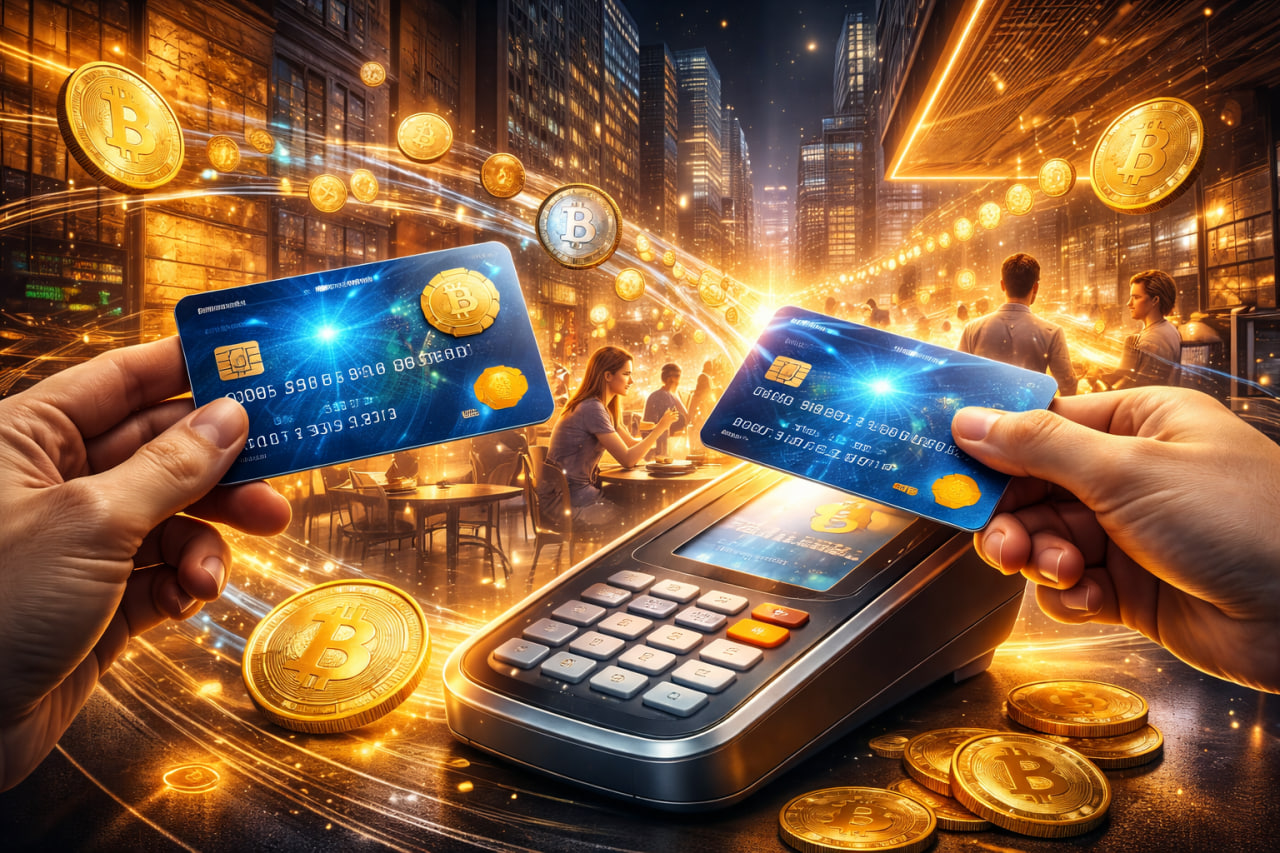
From a technical standpoint, how crypto cards work can be explained quite simply: the card is linked to a crypto wallet or a balance held with a provider, and at the moment of payment the digital asset is converted into fiat currency for settlement through the familiar card payment infrastructure. For the buyer, the process looks almost identical to a standard banking transaction.
The key difference lies in the source of funds. In a bank payment, money is debited from a checking account, while with a crypto card the payment comes from a digital asset that the servicing platform converts into the required currency. This lowers the barrier to entry: the user gets a familiar payment interface without giving up crypto liquidity.
What makes this scenario more convenient in everyday life:
- It turns a digital asset into a familiar payment instrument.
- It removes the need to manually exchange funds before making a purchase.
- It simplifies payments at merchants that do not directly accept cryptocurrency.
Why stablecoins are becoming a convenient foundation for daily payments
The main reason behind growing interest in payments with stablecoins is the predictability of value. While volatile coins are poorly suited for everyday spending, stablecoins provide a more understandable unit of account. This makes stablecoins for everyday spending far more convenient in situations where price stability matters — from online shopping to peer-to-peer transfers.
In practice, they solve the problem faced by users who want to spend cryptocurrency without volatility. The user does not risk dealing with a sharp price swing between the moment funds are stored and the moment they are spent. That is why the use of stablecoins in real life is becoming not a theoretical concept, but a practical model: the asset performs a payment function, not just an investment one.
Crypto card vs bank card: what changes for the user
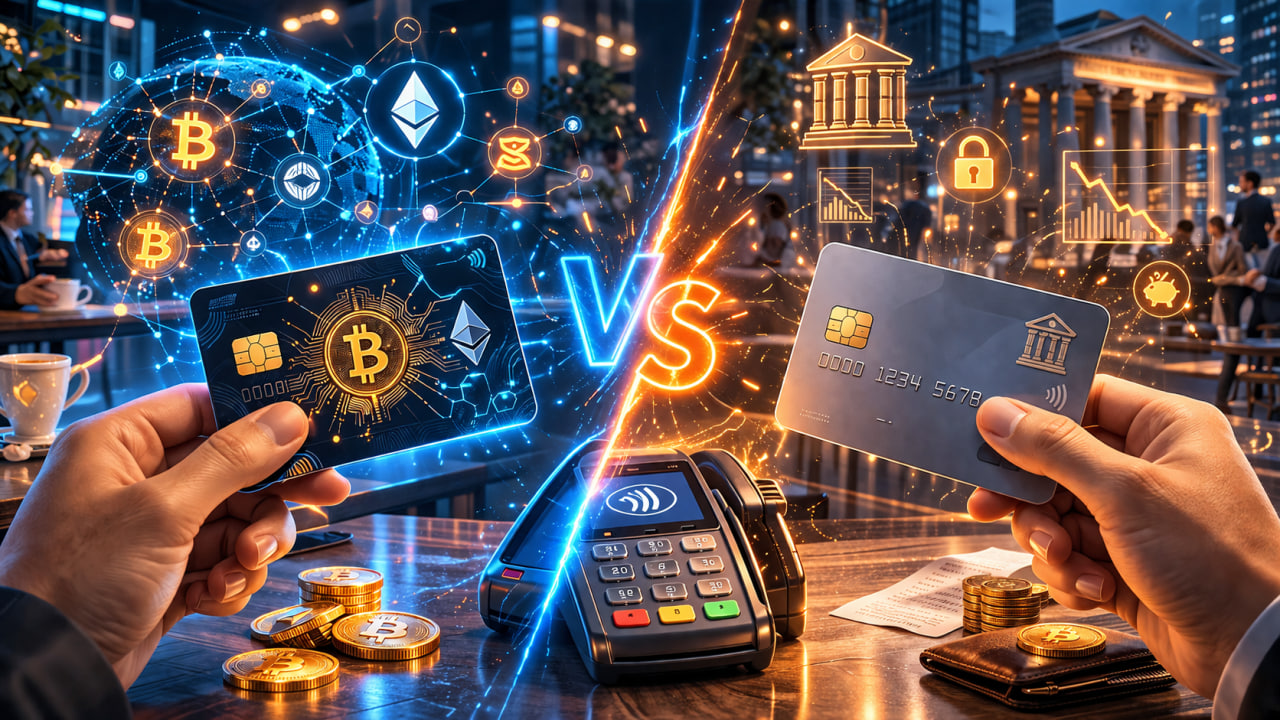
A comparison of a crypto card and a traditional bank card shows that competition is not only about technology, but also about the quality of the everyday user experience. In some scenarios, familiarity and the protection of bank services matter more; in others, faster cross-border access to funds and the flexibility of digital infrastructure become more important.
| Criterion | Crypto Card | Bank Card |
|---|---|---|
| Source of funds | Digital assets or stablecoins. | Fiat bank account. |
| International payments | Often more convenient when moving across jurisdictions. | More dependent on banks and local restrictions. |
| Fees and rewards | Cashback and special terms may be available, but the fee structure is less transparent. | Usually clearer in terms of pricing, but international costs may be higher. |
| Speed of access to funds | High when liquidity is available within the platform. | Tied to banking schedules and interbank infrastructure. |
| User control | Higher with well-designed wallet integration. | Lower, since control is concentrated at the bank. |
The advantages of a debit crypto card are most visible where the user regularly works with digital assets, receives transfers in stablecoins, or makes international payments. At the same time, crypto card fees and rewards remain an area where careful comparison of terms and tracking results matters, since apparent simplicity often hides differences in exchange rates, limits, and service charges.
Infrastructure, merchants, and real-world everyday use cases
Even the most convenient payment model will not become mainstream without developed infrastructure. Stablecoin payment infrastructure consists of wallets, processing solutions, card partnerships, business gateways, and conversion services. But the decisive factor is not the existence of the technology itself, but merchant adoption of stablecoins.
This directly determines the user experience of crypto payments. If a seller can accept payment without extra steps, and the fee as well as the final amount are clear in advance, a digital asset begins to be perceived as a normal payment instrument. That is when the use of digital assets for everyday purchases truly becomes visible.
The most realistic scenarios already look like this:
- Paying for digital services and subscriptions with a card linked to a crypto balance.
- Making payments while traveling and for international purchases without a complex banking chain.
- Sending money between individuals and then using those funds for daily expenses.
Risks, limitations, and the role of self-custody in consumer payments
Alongside convenience, the risks of crypto cards and stablecoins remain. The user depends on the issuer, the payment provider, the rules of a specific platform, and the applicable regulation. At any moment, limits may change, the list of available countries may be revised, the set of supported assets may shift, or the conversion terms may be updated.
A separate issue is self-custody and crypto cards. Self-custody gives users more control over their funds, but it can reduce the simplicity of everyday use if the card requires a centralized intermediary. This creates a constant trade-off between convenience, payment speed, and the level of control over assets. That is why the real usefulness of digital assets in retail payments depends not only on blockchain itself, but also on the architecture of trust surrounding the product.
The future of crypto cards, stablecoins, and mass consumer payments
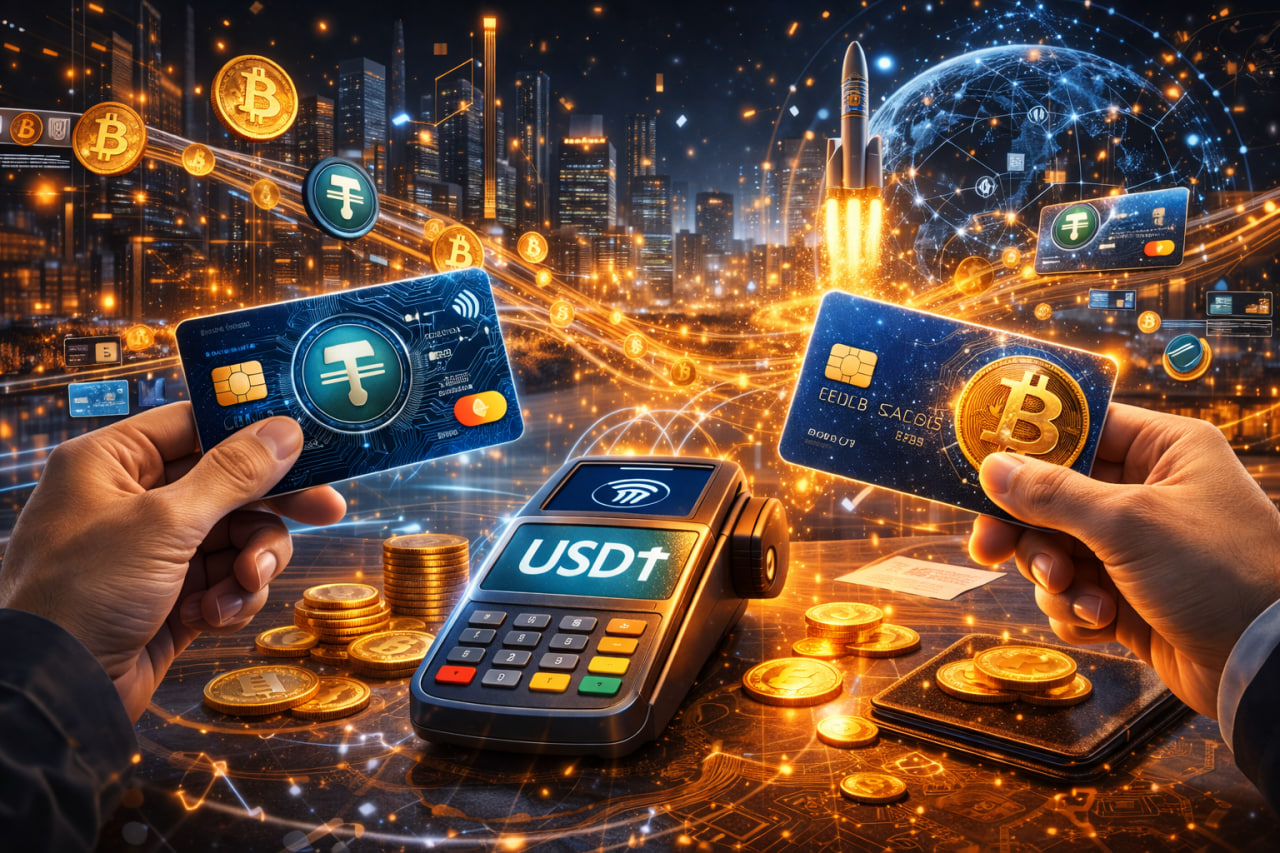
The next stage of development may be driven not so much by the emergence of new tokens as by improvements in everyday use cases. Stablecoins for cross-border payments, reduced technical complexity for users, and integration with familiar financial interfaces are coming to the forefront. As this shift continues, the future of consumer payments in stablecoins will also begin to take shape.
The prospects for the segment are especially visible in three areas:
- Expansion of international payments with more predictable costs.
- Greater accessibility of financial services for users outside the traditional banking model.
- A stronger link between crypto cards and financial inclusion in countries with limited payment infrastructure.
Conclusion
Crypto cards and stablecoins are gradually making digital assets less abstract and more practical. Their value becomes clear where the technology is integrated seamlessly into a familiar payment scenario and does not require extra actions from the user.
Mass adoption will depend on how transparent fees remain, how resilient the infrastructure becomes, and whether services can offer a frictionless payment experience. If that balance is achieved, everyday payments may become one of the most mature forms of digital asset adoption.