AI assistants for crypto traders: market analysis, trade management and risk control

Contents
- Introduction
- What Are AI Assistants for Crypto Traders!
- Crypto Market Analysis Using AI
- Trade Management and Automation
- Risk Control and Portfolio Management
- Conclusion
Introduction
The cryptocurrency market generates vast amounts of data: price charts, on-chain metrics, news, and social signals. Processing such information manually is becoming increasingly difficult, which is why AI assistants are being used more frequently.
AI-powered crypto trading support tools help analyze the market faster, identify patterns, and make more informed decisions in a dynamic environment. Algorithms can simultaneously process exchange data, blockchain indicators, and informational background, saving time on data collection and allowing more focus on decision-making.
What Are AI Assistants for Crypto Traders!

An AI assistant in crypto trading is a software tool that uses machine learning and data analysis to support trading decisions. It can function as an analytical platform, a notification system, or an automated trading module.
How AI Trading Assistants Work
The foundation of an AI-based assistant is the analysis of large datasets. Algorithms apply predictive analytics, elements of algorithmic trading, and data analysis methods.
Main data sources:
- Exchange trading data — volumes, orders, and liquidity.
- Blockchain metrics — address activity and movement of large funds.
- Historical price models — statistics of past market cycles.
- Information background — news and discussions on social media.
Core Functions of AI Trading Tools
Modern AI tools for crypto trading combine analytical and management capabilities.
| Function | Purpose |
|---|---|
| AI monitoring dashboards | Visualization of market indicators and data |
| AI alerts | Notifications of significant market events |
| AI portfolio management | Control of asset allocation |
| Trading decision support systems | Analytical recommendations for traders |
Crypto Market Analysis Using AI
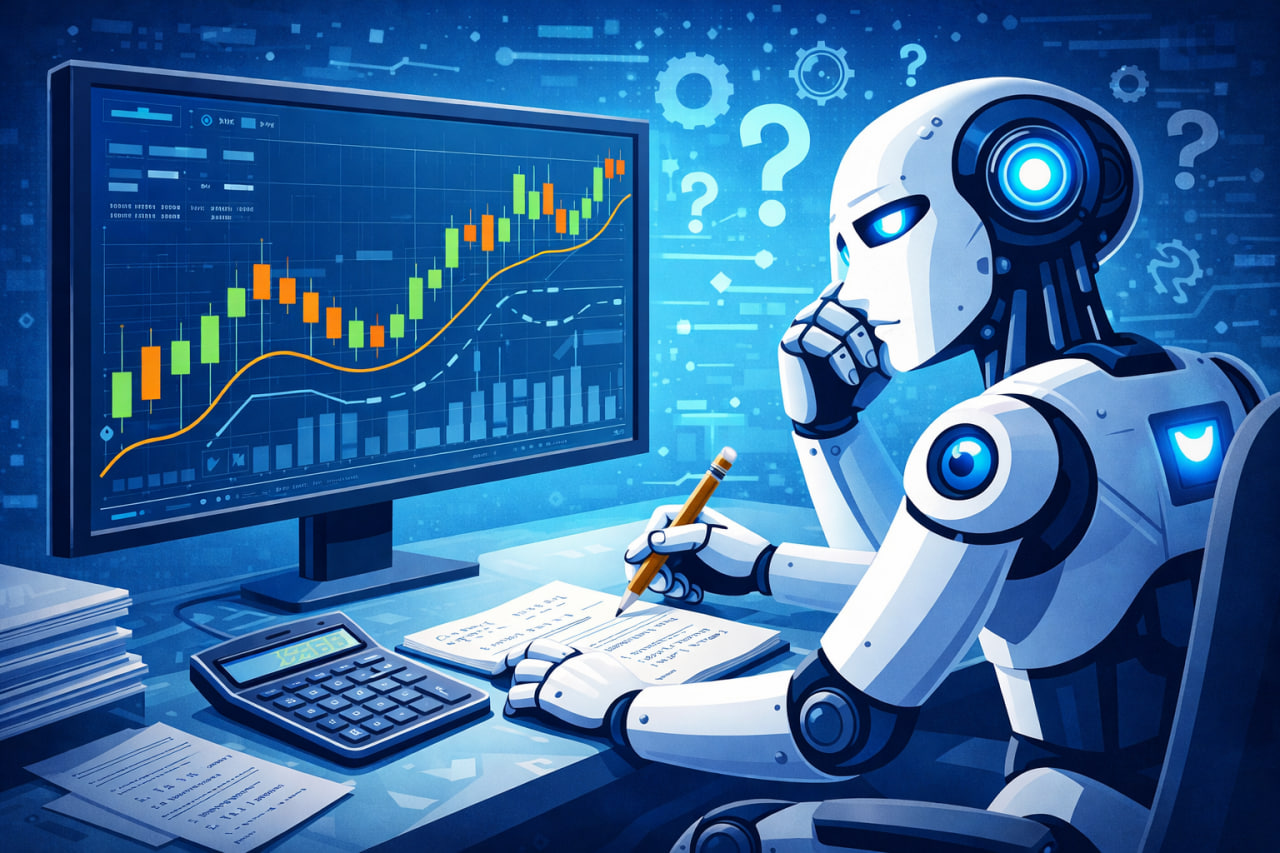
AI analysis tools combine exchange and blockchain data. AI-based blockchain data analysis methods help track the activity of large holders, changes in liquidity, and on-chain indicators.
Artificial intelligence is also used to analyze the informational background and forecast market movements.
Key areas of application:
- Sentiment analysis based on news and social media.
- Forecasting using historical models.
- Technical analysis to identify price trends.F
Trade Management and Automation

Trade management systems help control order execution and position status. Algorithms can automatically adjust trading parameters based on current liquidity and volatility.
Signals and Strategy Automation
One of the key development areas is AI-based automated trading. Trading algorithms can execute strategies without constant user involvement.
Such systems provide:
- Trading signals for crypto markets.
- Cryptocurrency trading bots.
- Real-time alerts on trading opportunities.
Risk Control and Portfolio Management

Cryptocurrency markets are highly volatile, so AI-based risk management tools help analyze volatility and assess potential drawdowns. This is especially relevant for portfolio monitoring and tracking trading performance under changing market conditions.
Key tasks of such systems:
- Cryptocurrency volatility analysis.
- Assessment of trading position risks.
- Modeling of market movement scenarios.
Portfolio Monitoring and Capital Protection
Portfolio monitoring systems track changes in asset values and warn about potential risks. An important role is played by AI-based stop-loss optimization, which allows automatic adjustment of capital protection levels.
Conclusion
AI assistants for crypto traders enable faster market analysis, automation of trading operations, and more effective risk control. These technologies combine data analytics, trade management, and portfolio monitoring, creating a more structured approach to digital asset trading.