The Evolution of DeFi: From Simple Protocols to Complex Financial Products
Contents
- Introduction
- What DeFi Is and How It Started
- Stages of DeFi Development
- Modern DeFi Products
- Why DeFi Became More Complex
- DeFi and Traditional Finance
- Future of DeFi
- Conclusion
Introduction
DeFi refers to decentralised finance, where operations are executed through smart contracts on a blockchain without banks or other intermediaries. This sector has become a significant part of the crypto market by introducing new ways to exchange assets, provide lending, and manage liquidity.
The evolution of DeFi shows how the market has moved from basic protocols to more advanced financial instruments. Initially focused on simple operations, the ecosystem later expanded to include new trading models, yield mechanisms, and interconnected services.
What DeFi Is and How It Started
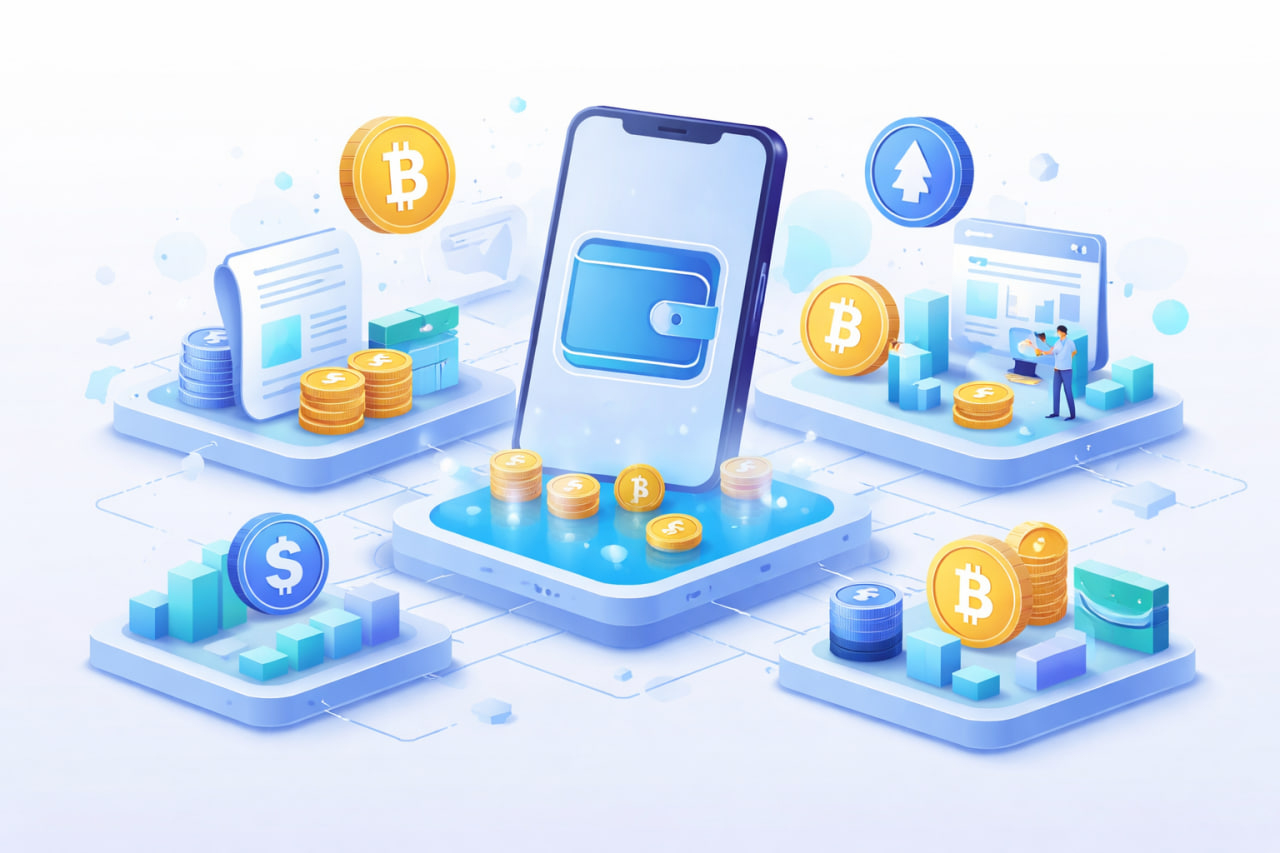
DeFi is a set of blockchain-based financial services where users interact directly with protocols via a wallet, while execution is handled by code. This model makes financial tools more open and reduces reliance on centralised structures.
Early DeFi Protocols
In its early stage, the market developed around several core functions:
- Token swaps
- Collateralised lending
- Liquidity provision
The first DeFi protocols enabled users to issue loans backed by collateral, exchange tokens without a centralised exchange, and participate in basic liquidity provision. These solutions formed the foundation of the market but remained structurally simple and limited in functionality.
Limitations of Early DeFi
Early DeFi had several clear limitations:
- Low liquidity
- Limited functionality
- High technical risks
- Weak infrastructure
As a result, the market could not yet compete with traditional finance in terms of scale, usability, or stability.
Stages of DeFi Development
DeFi developed gradually. At first, the market consisted of isolated protocols with basic use cases, but it quickly became more complex. This shift was driven by growing user interest, increasing liquidity, and the emergence of new capital management models.
Emergence of Liquidity Pools and AMM
A key milestone was the introduction of liquidity pools and AMM (Automated Market Makers). These mechanisms changed the trading model by replacing traditional order books with pool-based liquidity.
This brought several advantages:
- Simplified the launch of decentralised trading
- Enabled users to act as liquidity providers
- Increased market flexibility
Growth of Yield Farming
The next major phase was the rise of yield farming. Users began moving capital across protocols in search of higher returns. This accelerated liquidity inflows, intensified competition between projects, and made DeFi both more dynamic and more complex.
Formation of the DeFi Ecosystem
Over time, protocols began interacting with one another. One service could utilise the liquidity of another, while a single strategy could span multiple platforms. DeFi evolved into a financial ecosystem, rather than a collection of standalone tools.
Modern DeFi Products
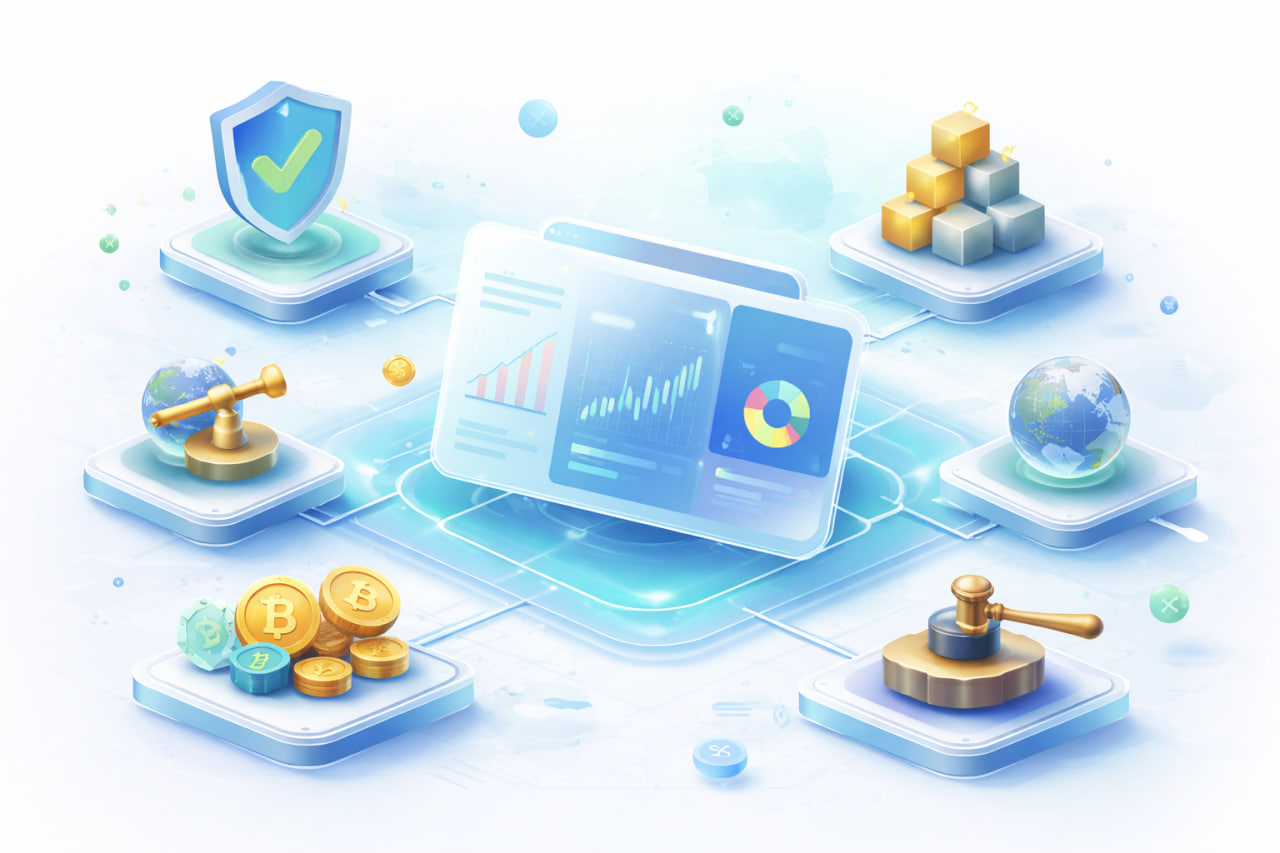
The modern DeFi market differs significantly from its early stage. Today, it includes not only token swaps and lending but also more advanced instruments for yield generation, hedging, and capital management.
DeFi Derivatives and Synthetic Assets
One of the key signs of market maturity is the emergence of DeFi derivatives and synthetic assets. Derivatives allow users to build positions based on the price of an underlying asset without directly owning it, while synthetic assets replicate the value of other instruments within the blockchain. This has brought DeFi closer in structure to traditional financial markets.
Multi-Protocol Strategies
An important stage in development has been the rise of multi-protocol strategies. A user can engage multiple services simultaneously: use an asset as collateral in one protocol, deploy borrowed funds in another, and allocate liquidity in a third. This approach increases capital efficiency but also introduces dependency on an entire chain of interconnected mechanisms.
DAO and Governance
As the sector evolved, the role of governance increased. Protocols began to develop as systems where key decisions are made through participant voting. This strengthened the importance of governance tokens and made the development of DeFi more structured.
Why DeFi Became More Complex
The increasing complexity of DeFi is a direct result of market growth. As capital and competition expanded, simple solutions became insufficient. Protocols had to extend functionality, improve capital efficiency, and introduce more advanced financial products.
Growth of Liquidity and TVL
One of the main factors has been the growth of TVL (Total Value Locked) — the total amount of funds held within protocols. As more capital accumulated, new opportunities emerged for complex trading mechanisms, advanced yield models, and combined strategies.
Competition Between Protocols
Competition has also played a major role. As more similar projects entered the market, protocols began competing for liquidity and users through more flexible conditions, new reward models, and increasingly complex tokenomics.
At a more mature stage, not only do returns and available tools matter, but also verified trading performance. For traders, this means the ability to present a verifiable trading history, public portfolio statistics, and transparent results without relying on manual reports or screenshots. This approach increases trust in a strategy, simplifies performance analysis, and makes a trading profile more understandable for partners, communities, or potential capital.
Risks of Modern DeFi Instruments
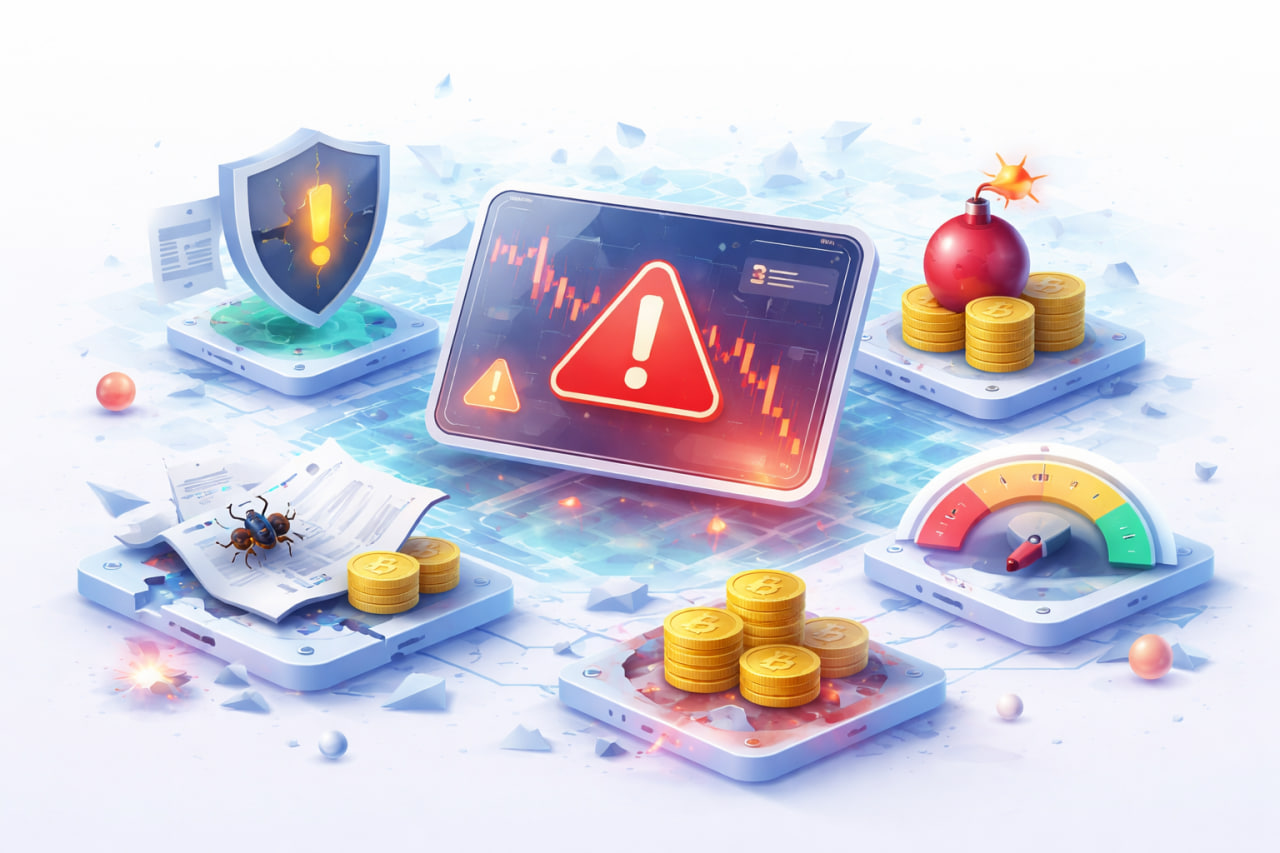
As DeFi instruments become more complex, the requirements for risk understanding increase. The modern market offers more opportunities, but at the same time introduces a greater number of vulnerabilities.
Smart Contracts and Security
The main risks are related to smart contracts, errors in protocol logic, and dependence on interconnected services. Even audits cannot fully eliminate technical issues, especially when a product has a complex architecture and multiple integrations.
Liquidation and Volatility Risk
A separate threat comes from liquidations. In many models, users operate with collateral, and a sharp drop in its value can lead to automatic position closure. This risk intensifies under high market volatility, the use of borrowed capital, and participation in complex strategies.
DeFi and Traditional Finance
DeFi and traditional finance address similar tasks: asset exchange, lending, yield generation, and capital management. The difference lies in system architecture. In traditional finance, banks and brokers play a central role, while in DeFi, these functions are partially handled by smart contracts and decentralised protocols.
The difference between DeFi and traditional finance is most clearly seen through a direct comparison of their core principles and limitations.
| Parameter | DeFi | Traditional Finance |
|---|---|---|
| Access to instruments | Through a wallet and protocol | Through banks, brokers, and financial platforms |
| Intermediaries | Absent or minimised | Central role |
| Transparency of operations | Higher due to blockchain and open data | Lower for external users |
| Speed of product development | High | Lower due to regulation and complex infrastructure |
| Ease of use for beginners | Lower | Higher |
| Key risks | Smart contracts, liquidations, user errors | Regulatory, operational, banking constraints |
Advantages of DeFi
The key strengths of DeFi include:
-
Accessibility
-
Transparency
-
Reduced reliance on traditional intermediaries
-
Flexibility of financial products
Limitations and Barriers
At the same time, the sector still has significant limitations:
- Regulatory uncertainty
- Complexity of use
- High risks for inexperienced users
- Technical vulnerabilities
Future of DeFi
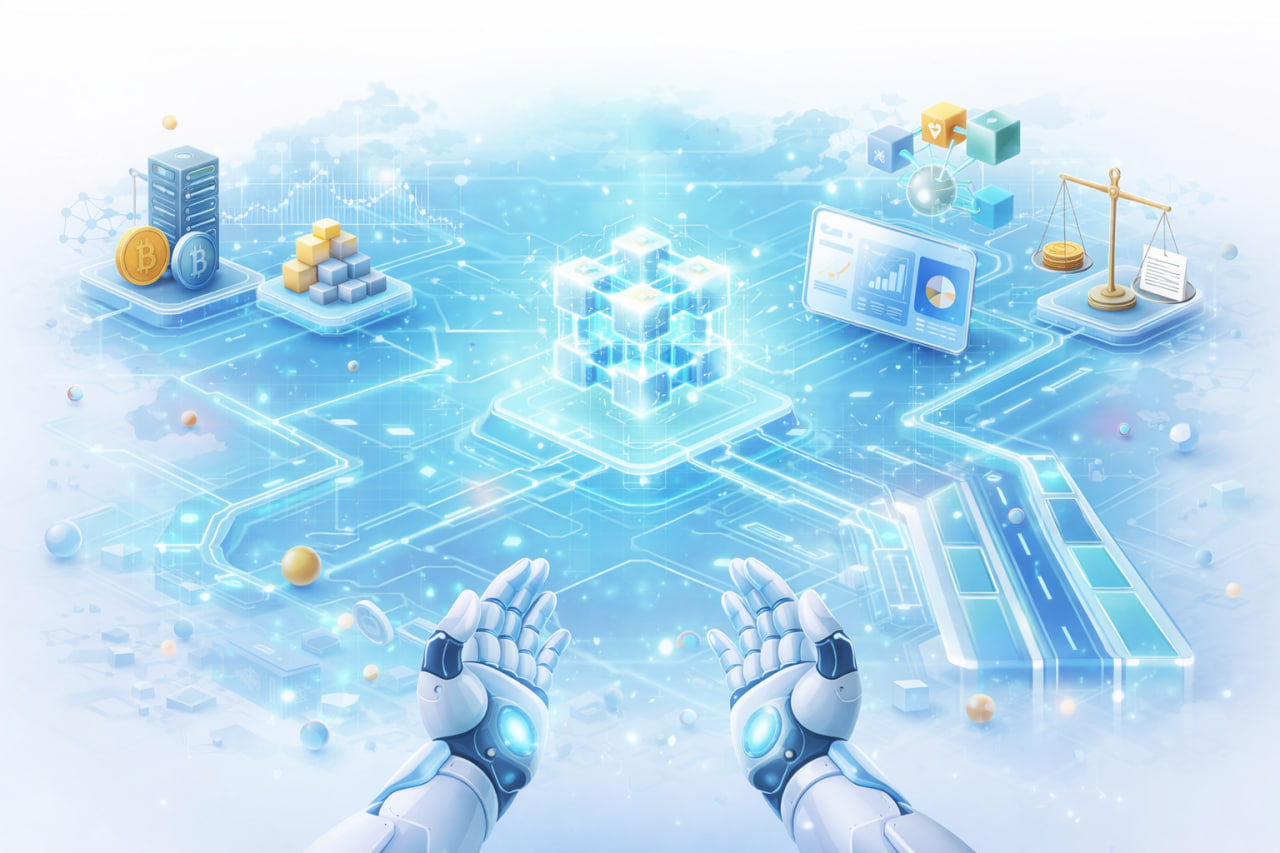
The future of the DeFi market is closely tied to infrastructure development, strategy automation, and gradual integration with traditional finance.
Key DeFi Trends
The main directions of development include:
- Growth of derivatives
- Infrastructure development
- UX improvements
User Perspectives
For users, this means broader access to financial instruments, more intuitive interfaces, and more precise risk management. However, the core principle remains unchanged: the more opportunities the market provides, the higher the requirements for understanding its mechanics.
Conclusion
DeFi has moved beyond a set of isolated tools and evolved into a полноценную financial environment with its own internal logic and competition. Simple use cases have been replaced by complex strategies, and standalone protocols have turned into an interconnected ecosystem.
As opportunities expanded, the entry threshold increased as well. It is no longer enough to simply use services — understanding market structure, liquidity dynamics, and the real risks behind returns has become essential.
DeFi continues to move towards greater complexity and more professional use. The broader the functionality becomes, the higher the demands placed on the user.