API Keys as a Platform Trust Layer
Contents
- Introduction
- Why API Keys Became Important for Trading Platforms
- How API Keys Work in Crypto Trading
- API Keys and Portfolio Analytics
- API as the Foundation of Trader Transparency
- API Keys in Copy Trading
- API Keys and Trading Automation
- API Keys and Risk Control
- API Key Security
- Main User Mistakes
- What a Reliable Trading Platform Should Do
- Why API Keys Became a Trust Layer
- Conclusion
Introduction
An API is a bridge between an exchange and analytics, but this bridge must be protected. In the past, API keys were mostly associated with trading bots. Today, their role is much broader. Trading platforms use them for portfolio analytics, copy trading, trading reports, risk control, and working with exchange data.
For an active trader, an API key is a way to avoid collecting every statistic by hand. A platform can pull trades, balances, fees, positions, and trading history automatically. But convenience also adds risk. If a key is configured incorrectly, a third-party service may receive more permissions than it actually needs.
Why API Keys Became Important for Trading Platforms

An API key connects an exchange to an external service. This may be an analytics platform, a portfolio tracking service, a trading bot, a reporting system, or a tool for copying trades.
Without an API, a trader would have to move data manually: open trades, closed trades, fees, profit, loss, balances, and order history. For someone who trades on one exchange once a week, that may still be possible. For an active trader using several exchanges, this approach breaks down quickly.
API keys are important not only for automated trading. They help solve several tasks:
- Collect portfolio analytics
- Track profit and loss
- Reconcile trade history
- Verify trading results
- Update data in real time
- Control account risk
That is why API keys have become part of trading platform infrastructure, not just a technical setting for bots.
How API Keys Work in Crypto Trading
Through a trading API, an exchange sends data to an external service or gives it permission to perform actions. Everything depends on the key settings. One key may only read data. Another may open trades. A third may have more sensitive permissions.
For example, Coinbase documentation describes different API key permissions: viewing data, trading, transfers, and managing settings. This is a good example of why access rights should be checked before connecting any service.
In simple terms, an API key can transmit:
- Balances
- Trades
- Orders
- Open positions
- Fees
- Trading history
- Account data
For portfolio analytics, read-only access is often enough. Such a key can show data, but it cannot open a trade or withdraw funds. A trading bot already needs trading permissions. Withdrawal access is the most sensitive option, and it should not be enabled without a very strong reason.
API Keys and Portfolio Analytics
Manual tracking stops working when a trader uses several exchanges, wallets, and subaccounts. Trades happen at different times, fees vary, some positions are open, some are closed, and part of the capital may sit in stablecoins.
In this situation, a trader may see profit on one exchange but still miss the overall result. One account is in profit, another is in loss, and a third is tied up in open positions. Without a unified view, it is hard to assess risk.
An API connection helps collect data in one place. The platform can see trade history, current balances, profit, loss, fees, and portfolio structure. This turns a set of separate trades into a clear view of capital.
| Task | What an API Key Provides |
|---|---|
| Portfolio analytics | Collects balances, trades, and fees |
| Result verification | Shows real trading history |
| Risk control | Helps view positions, leverage, and drawdown |
| Copy trading | Transmits data faster and more accurately |
| Reports | Simplifies trading data export |
For a trader, this saves time and reduces the risk of calculation errors.
API as the Foundation of Trader Transparency
Profit screenshots no longer look like reliable proof. They can be edited, shown selectively, or taken out of context. One attractive chart does not show drawdown, capital size, or weak periods.
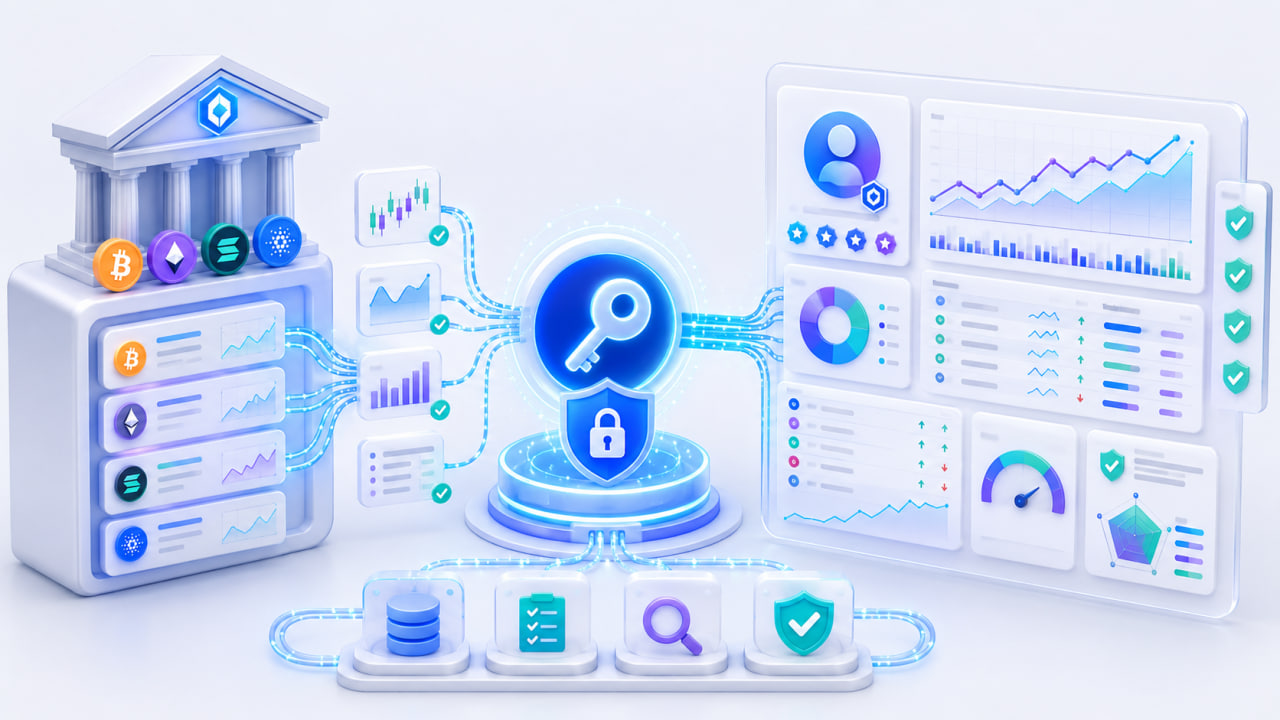
Data received through an API gives a stronger foundation. It is linked to real trading history on an exchange. It can be used to assess how long a strategy has been active, how often trades occur, position size, drawdown, and trader behavior across different market periods.
This matters for copy trading, trader subscriptions, and public trading profiles. A subscriber needs to understand not only the final profit, but also the risk the trader took to achieve it.
API Keys in Copy Trading
Copy trading requires accurate data. If a signal arrives late or incomplete, the subscriber may get a different result from the trader. This is especially noticeable in a volatile market, where price can change within seconds.
An API helps transmit data faster. But this is where risks appear. A user needs to understand what actions the key allows. Can the service only read data? Can it open trades? Are there limits? Which markets are available? Can its activity be restricted to specific instruments?
Before connecting a copy trading service, it is worth checking:
- What permissions the API key has
- Whether the service can open trades
- Whether withdrawal access is enabled
- Whether IP addresses can be restricted
- How to delete the key if needed
- What data the platform receives
If a user does not understand the key permissions, they are effectively granting access blindly.
API Keys and Trading Automation
An API is useful not only for opening trades. It helps automate routine tasks: collecting statistics, updating a portfolio, preparing reports, sending signals, calculating risk, and checking trade history.
But automation does not make a strategy profitable by itself. A bot or service simply follows rules. If the rules are weak, an API will only speed up mistakes. It is like a fast car without a proper route: there is speed, but the destination is no closer.
That is why API keys should be treated as a tool, not as a replacement for strategy. They help a trader work faster and more cleanly, but they do not remove market risk.
API Keys and Risk Control
Through an API, a trading platform can see position size, balance, leverage, open orders, drawdown, and capital concentration. This helps a trader notice risk growth faster.
For example, a trader may think their exposure is moderate. But once all positions across several exchanges are combined, it may turn out that most of the capital depends on one asset or one market direction.
Crypto markets move quickly. If data updates too late, a trader may notice the problem only after a sharp price move. That is why real-time portfolio analytics becomes an important part of risk management.
API Key Security

An API key is access to data or actions on an exchange, so it should not be stored carelessly, sent through chats, or connected to services without review. For portfolio analytics, a read-only key is usually enough: it allows access to trades, balances, fees, positions, and trading history, but does not allow fund withdrawals.
This format is especially important for traders who need secure trading analytics: through a limited API connection, they can collect portfolio statistics, trade history, drawdown, and performance dynamics without unnecessary permissions. As a result, the trader gets a clear view of their trading, while access remains focused only on the data needed for analytics.
Main User Mistakes
The first mistake is using one key for every task. A user creates an API key and connects it to analytics, a bot, copy trading, and third-party services. If that key leaks, the risk affects every connected use case at once.
The second mistake is granting unnecessary permissions. Users often enable trading or transfers “just in case,” even when a service only needs data. This is a poor practice: the broader the permissions, the greater the potential damage.
The third mistake is not reviewing active connections. A trader may connect a service a year ago, stop using it, and still leave the API key active. Old keys like this should be deleted regularly.
What a Reliable Trading Platform Should Do
A reliable trading platform should clearly explain which permissions it needs and why. The user should understand the difference between data access, trading access, and transfer access.
A good service does not request more permissions than the function requires. If a platform is used only for portfolio analytics, it does not need withdrawal access. If a service asks for more than necessary, that is a reason to stop and check the details.
It is important that the user can manage the connection themselves: delete the key, change access, disconnect an exchange, and understand what data the platform receives.
This is not only a matter of convenience. It is a matter of trust. An API integration should be understandable, limited, and controlled.
Why API Keys Became a Trust Layer
API keys help build trust through data, not promises. They show trades, history, drawdown, balance, fees, and strategy behavior. For traders, subscribers, and platforms, this is more important than attractive screenshots.
At the same time, API security remains critical. In the OWASP API Security Top 10, key risks include problems with authorization and access control. For trading platforms, this is especially important because an access error can affect user funds.
API keys combine analytics, automation, copy trading, and risk control. That is why they have become not just a technical detail, but a layer of trust between the exchange, the platform, and the user.
Conclusion
API keys are not only a tool for bots. They are a bridge between an exchange, analytics, automation, and trust in trading data.
Through an API, a trading platform can collect portfolio analytics, show real trade history, help with reports, and give a trader more control over risk. But this access must be protected: limit permissions, avoid unnecessary functions, delete old keys, and understand which service receives what.
When an API is configured correctly, it makes trading more transparent and convenient. When it is configured poorly, it becomes a weak point. That is why API keys have become an important part of trading platforms, but they require proper security to be trusted.