Integration of artificial intelligence and blockchain
Contents
- Introduction
- What Is AI and Blockchain Integration
- How AI and Blockchain Work Together
- Applications of AI and Blockchain in the Crypto Industry
- AI Analytics and Crypto Market Forecasting
- AI and Blockchain in DeFi and Web3
- Future of the AI-Blockchain Ecosystem
- Conclusion
Introduction
The integration of artificial intelligence and blockchain is becoming one of the most frequently discussed directions in the development of digital technologies. These systems solve different tasks: artificial intelligence analyzes large volumes of data and identifies patterns, while blockchain ensures immutability and transparency of information. Their combination forms a new infrastructure for the crypto industry and the digital economy.
The growing interest in integrating artificial intelligence and blockchain is driven by the development of financial markets, Web3 projects, and decentralized services. The joint use of these technologies enables automation of data processing, improves analytical accuracy, and creates new interaction models within digital ecosystems.
What Is AI and Blockchain Integration
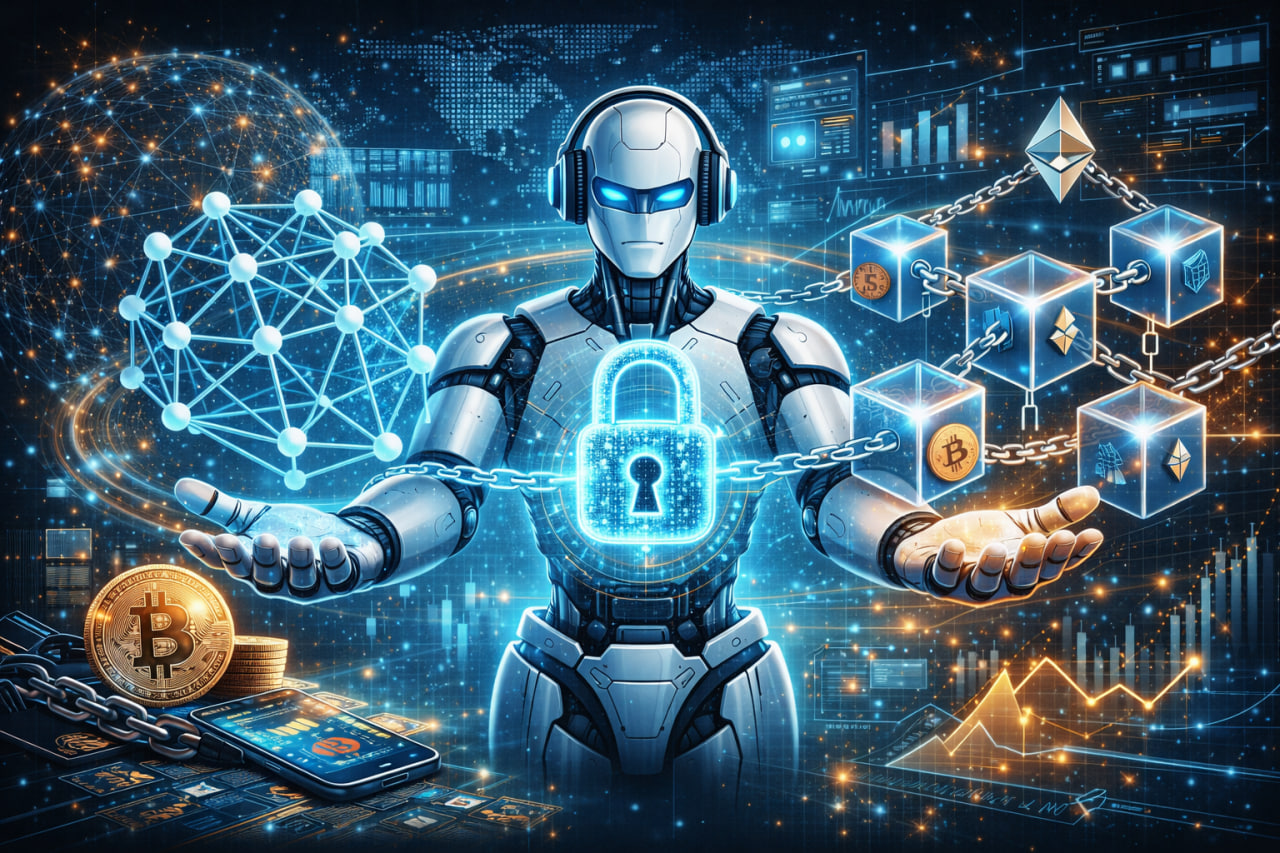
The integration of artificial intelligence and blockchain represents the combination of analytical capabilities of machine learning algorithms with a decentralized data storage infrastructure. In this model, blockchain acts as a reliable source of information, while AI algorithms analyze transactions, user behavior, and market indicators.
AI-blockchain technology opens opportunities for creating next-generation services — from intelligent financial platforms to automated asset management systems.
The key elements of interaction between these technologies can be outlined as follows:
- Decentralized data storage — blockchain ensures immutability and availability of information.
- Machine learning algorithms — AI systems analyze blockchain data and identify patterns.
- Intelligent transaction processing — automated analysis of cryptocurrency transaction flows.
How AI and Blockchain Work Together
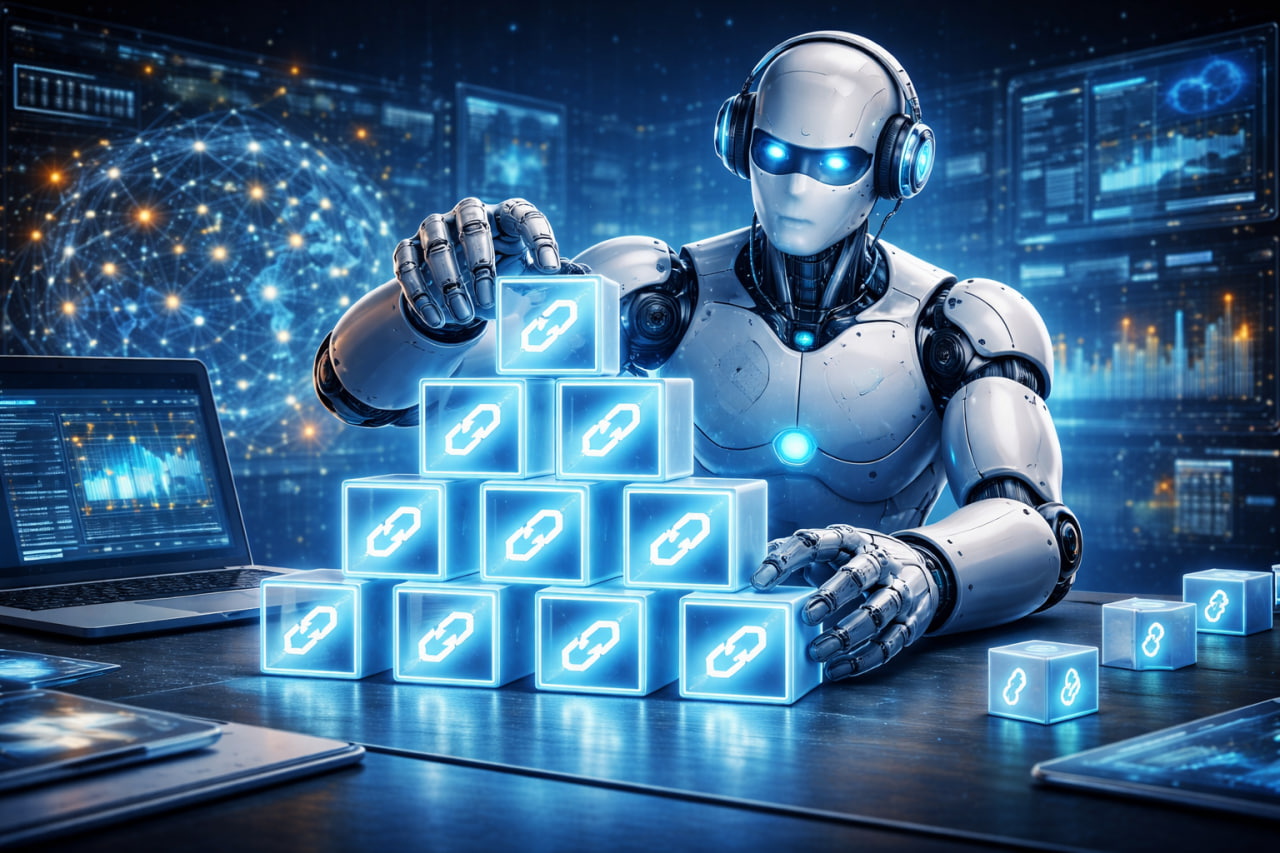
Machine learning algorithms are capable of analyzing large volumes of blockchain data, including transactions, smart contracts, and user activity. This enables the creation of analytical tools that can identify market trends and predict changes in cryptocurrency ecosystems.
| System Component | Role of Blockchain | Role of Artificial Intelligence |
|---|---|---|
| Data | Decentralized and immutable transaction records | Use of data for model training |
| Operations | Transparent blockchain transactions | Detection of anomalies and market patterns |
| Processes | Smart contracts automate operations | Algorithms optimize decision-making |
| Service Development | Creation of Web3 infrastructure | Intelligent analytical tools |
This combined approach enables the development of blockchain platforms with embedded artificial intelligence, where analytics and data processing are integrated directly into the network architecture.
Applications of AI and Blockchain in the Crypto Industry
The use of artificial intelligence in cryptocurrency markets has significantly expanded the capabilities of data analysis and investment management. AI systems can process vast amounts of information from blockchain networks, exchange platforms, and open financial sources. This also creates additional opportunities for trading analytics and evaluating strategy performance based on verified market data.
The most common application areas include:
- Blockchain data analytics — analysis of transactions, network activity, and market participant behavior.
- Cryptocurrency market forecasting — use of neural networks to assess price dynamics.
- Security enhancement — detection of suspicious transactions and fraudulent schemes.
The integration of AI solutions enables the creation of more efficient digital asset management tools and improves the transparency and security of the crypto economy.
AI Analytics and Crypto Market Forecasting
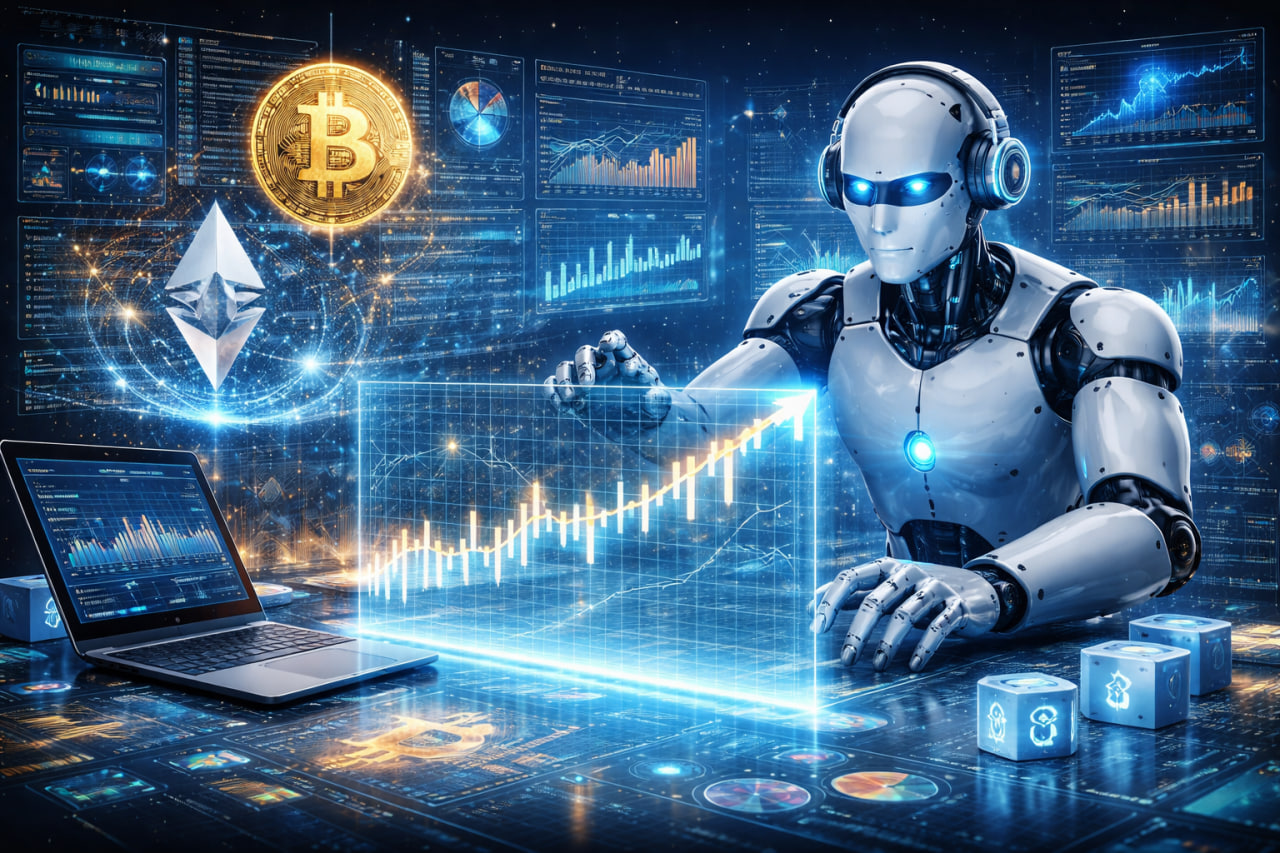
AI-based analytics has strong potential for evaluating cryptocurrency market dynamics. Machine learning algorithms can analyze historical data, trading volumes, network metrics, and behavioral factors.
Predictive analytics models can identify hidden relationships between market events and changes in the value of digital assets. This makes cryptocurrency forecasting more accurate compared to traditional analytical methods.
AI and Blockchain in DeFi and Web3
Within the Web3 ecosystem, the integration of artificial intelligence and blockchain contributes to the development of decentralized financial services. DeFi platforms can use data analysis algorithms to assess risks, manage liquidity, and optimize smart contracts.
Artificial intelligence can also improve the functionality of smart contracts. Such systems can analyze transaction conditions and automatically adjust operational parameters depending on market conditions.
Future of the AI-Blockchain Ecosystem
The development of AI-blockchain infrastructure is forming the foundation of a new digital economy. In the coming years, large-scale decentralized networks are expected to emerge, where artificial intelligence will be integrated directly into blockchain platform architectures.
Promising directions of development include:
- Decentralized AI networks — distributed data processing systems.
- Infrastructure AI-blockchain projects — platforms for developing intelligent Web3 services.
- Integration of analytics into financial protocols — automated liquidity and risk management.
- Creation of intelligent digital ecosystems — integration of financial, technological, and analytical services.
A new architecture of digital markets is gradually taking shape, expanding the possibilities of blockchain technology usage.
Conclusion
The integration of artificial intelligence and blockchain is becoming an important stage in the development of the crypto industry and the Web3 ecosystem. Combining AI’s analytical capabilities with the transparency of blockchain networks enables the creation of more efficient tools for data analysis and digital asset management.
AI-blockchain technology contributes to the development of automated trading systems, analytical platforms, and decentralized financial services. In the long term, it provides the foundation for a new digital infrastructure in which intelligent algorithms and decentralized networks can operate as a unified technological system.