How to Verify a Crypto Trader Before You Copy Them
Contents
- Introduction
- Why screenshots alone cannot be trusted
- What data to check before copying
- Transparent statistics instead of promises
- Privacy in crypto and result verification
- Selective data disclosure
- Mixers and privacy-focused coins
- What questions to ask a trader
- Signs of a reliable trader
- Red flags before copying
- How a beginner can make a decision
- Conclusion
Introduction
Privacy in crypto matters. It helps users avoid exposing unnecessary personal data, wallets, and the size of their capital. But privacy should not replace verification of real results. If someone offers to let others copy their trades, words and screenshots alone are not enough.
Before copying a trader, you need to look at data: exchange records, drawdown, trading period, transparent statistics, and how the strategy behaves during different market phases. Otherwise, the subscriber does not understand what exactly they are copying: a proper trading system or a polished showcase.
The main idea is simple: privacy is not synonymous with crime, but it is not a neutral topic either. If a trader hides personal data, that is normal. If they hide losses, risks, and real trades, that is already a problem.
Why screenshots alone cannot be trusted
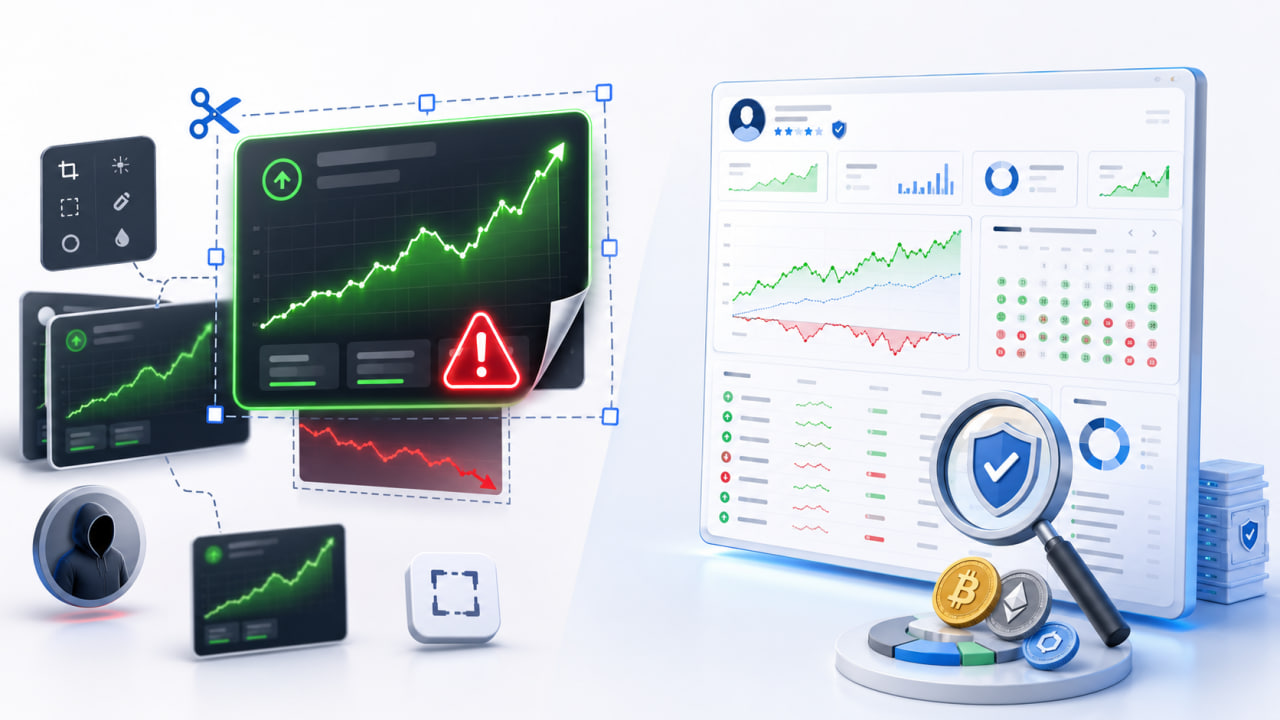
A profit screenshot does not prove that you are looking at a strong trader. It can be edited, made in demo mode, cropped from the full account, or show only a successful trade. On social media, you often see the attractive part of the story, but not the drawdown, bad entries, or real risks.
Screenshots with phrases like “up 300% in a month” or “stable income every day” are especially dangerous. Regulators have long considered promises of high profit with no risk a red flag for investors. In SEC materials, this logic is directly linked to signs of dangerous schemes.
Profit without risk means nothing. A trader may have earned 50%, but before that they may have lost 70% of the account. For a beginner, such a strategy may be too dangerous. That is why it is important to look not only at returns, but also at the path to those returns.
What data to check before copying
Before copying trades, you need to understand whether the trader has a real track record. A good result should last not for a couple of days, but for at least several months. What matters is not promises, but facts.
| What to check | Why it matters |
|---|---|
| Exchange records | Show real trades, volumes, and trading frequency |
| Drawdown | Helps you understand how much can be lost during a bad period |
| Trading period | Shows whether the result was random or sustainable |
| Position size | Helps assess the risk per trade |
| Behavior in a bad market | Shows whether the trader can survive stress |
Exchange records are more important than manual reports. They show that the trades really happened on an exchange. They can show how often the trader enters the market, what volumes they use, how long they hold positions, and what they do after losses.
Drawdown is the fall in capital from a high point to a low point. For example, an account grew to $10,000 and then fell to $7,000. The drawdown was 30%. This is one of the main risk indicators. If a trader hides drawdown, they are hiding the real price of their returns.
The trading period also matters. A result over one week proves almost nothing. The trader may simply have caught a strong market rally. Statistics over several months are more meaningful: they show how the strategy behaves in rising, falling, and sideways markets.
Transparent statistics instead of promises
A proper trading profile should show more than just final profit. It should display trade history, current results, drawdown, risk, trading period, and the overall account dynamics. Therefore, before copying, it is better to look not at screenshots but at verified trading results, where you can assess real trades, portfolio metrics, and strategy behavior across different periods. This helps you understand how the trader earns, how much they risk, and how they get through losing market stretches.
A person should understand not only how much the trader earned, but also exactly how they did it. One thing is a calm strategy with moderate risk. Another is aggressive trading where a single bad trade can wipe out a large part of the deposit.
Good statistics answer simple questions:
- How long the trader has been trading
- What the maximum drawdown was
- How often losing periods occur
- What risk is taken on one trade
- Whether there are sharp jumps in capital
- Whether real trades are visible
Without this data, copying turns into blind trust. In crypto, that is a poor foundation for working with money.
Privacy in crypto and result verification
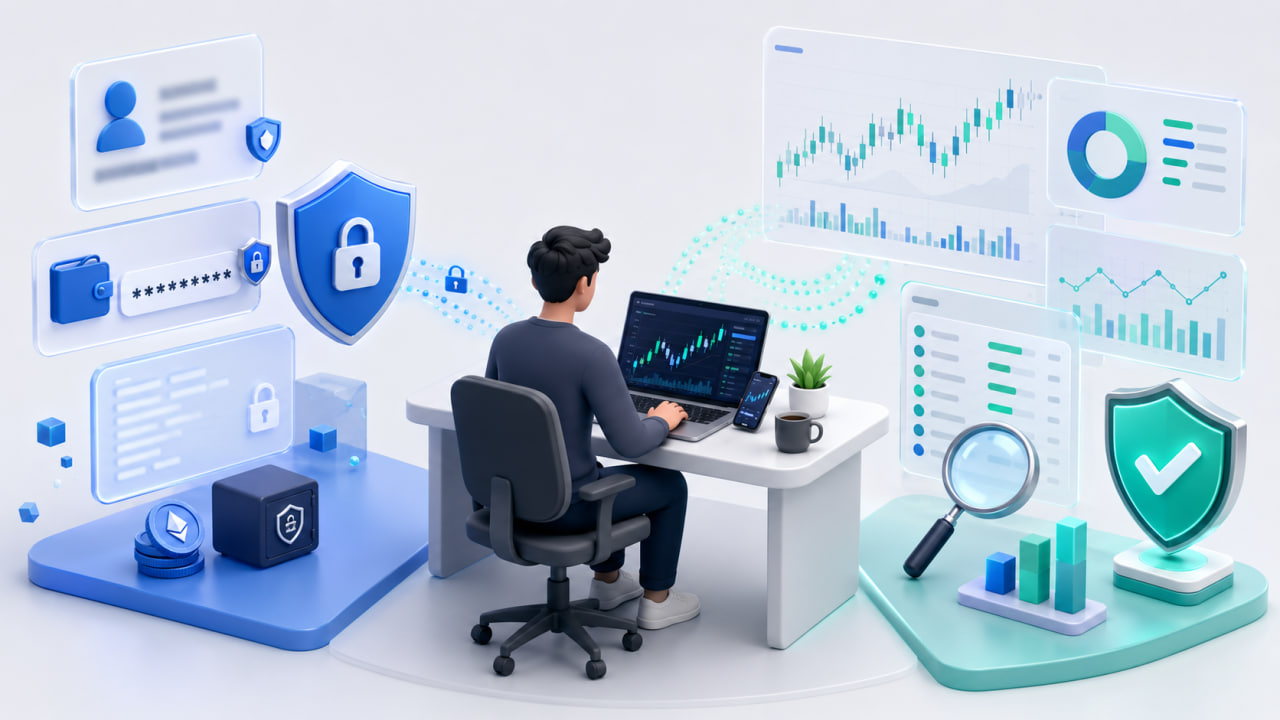
A trader does not have to disclose everything. They may choose not to show their passport, personal wallets, full capital size, home address, or private details of their life. Privacy in crypto is needed for security, because public data can attract scammers, phishing, and unwanted attention.
But there is a difference between privacy and opacity. Privacy protects personal data. Opacity hides risks.
If a trader says, “I do not disclose personal data, but I can show trading statistics,” that is a normal approach. If they say, “Trust me, I will not show statistics, I will not tell you the drawdown, and I will not provide trades,” that is a red flag.
Selective data disclosure
Selective data disclosure is a compromise. A trader can show the important numbers without revealing unnecessary personal information. For example, they can provide access to trading statistics, drawdown, trading period, and trade history without publicly showing all wallets and personal data.
This approach suits the crypto market well. In Web3, people value privacy, but the market still requires trust. That is why the subscriber should see the key metrics, while the trader should have the right not to disclose anything unnecessary.
For copy trading, this balance is especially important. The subscriber is not buying a picture. They are taking on someone else’s risk. That means they should have enough data for assessment.
Mixers and privacy-focused coins
Mixers and privacy-focused coins are not always connected with crime. Sometimes users want to hide personal transfers, avoid showing the size of their balance, or separate a public wallet from a personal one. Privacy itself does not make someone a scammer.
But these tools make it harder to assess the source of funds and the history of transactions. Mixers have long been debated because they are used by both ordinary users and bad actors. For example, a U.S. court later overturned part of the sanctions logic around Tornado Cash, but the dispute itself showed that privacy in crypto remains a complex topic for the market and regulators.
For a subscriber, the conclusion is simple. If a trader uses privacy as an argument, but does not show trades, does not disclose drawdown, and does not explain risk, that is a bad sign. Privacy should not be a cover for empty promises.
What questions to ask a trader
Before copying, you should not be afraid to ask questions. A proper trader will calmly explain their strategy. If a person gets angry, applies pressure, or avoids answering, it is better not to take the risk.
Questions about the strategy:
- Which market is being traded
- What risk is taken on one trade
- How the trader limits losses
- What happens during strong volatility
- Whether there are rules for exiting a position
Questions about the statistics:
- How much real trading history is available
- What the maximum drawdown was
- Whether exchange records can be reviewed
- What the average return over the period is
- How the result can be verified
These questions help quickly separate a trader from a seller of promises. If a person has a system, they will explain it in simple words. If they have only attractive screenshots, the answers are often vague.
Signs of a reliable trader
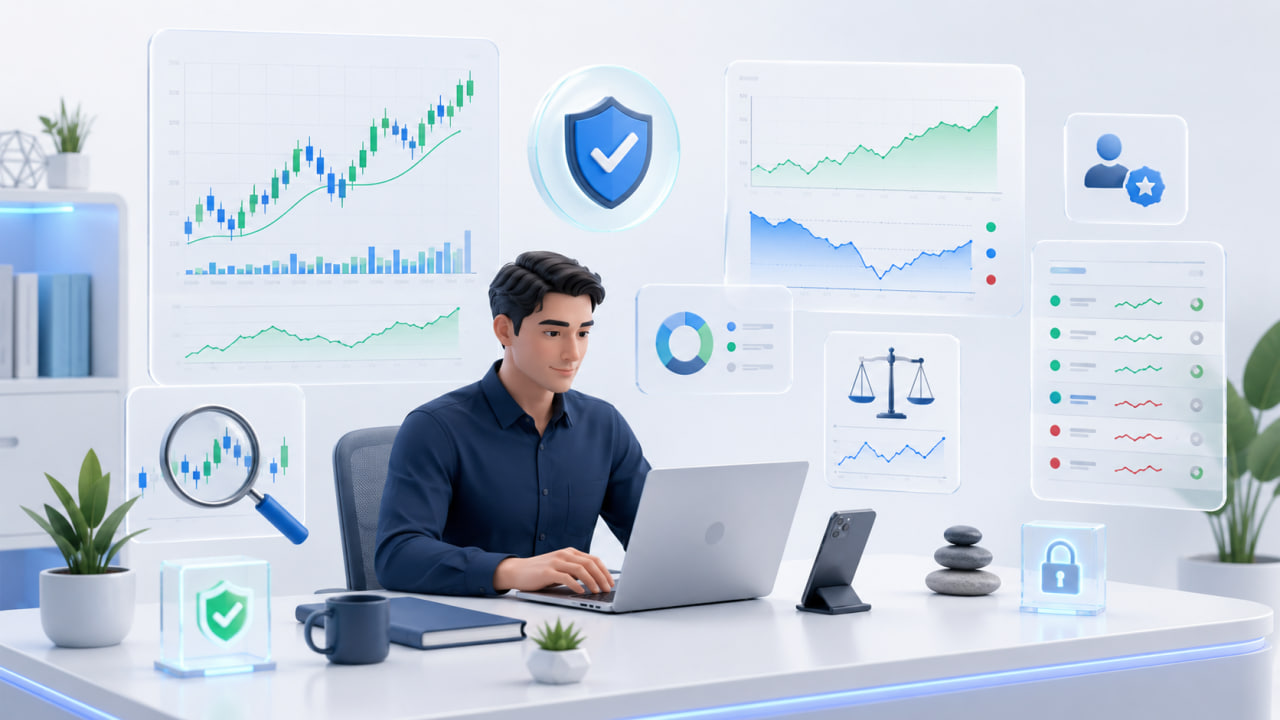
A reliable trader does not promise guaranteed profit. They understand that the market can move against them. They talk about risks, show drawdowns, and do not pretend that losses do not exist.
Such a trader has open statistics, clear trade logic, and calm communication. They do not pressure people with urgency, do not promise quick multiples, and do not demand that money be transferred directly to a personal wallet.
It is a good sign if the trader honestly says:
- During which periods the strategy works worse
- What loss is considered acceptable
- Why a trade may fail
- What the subscriber should know before starting
This honesty does not guarantee profit, but it reduces the risk of blind trust.
Red flags before copying
Red flags are almost always connected with pressure, promises, and refusal to show data. If a trader builds the whole image on emotions rather than statistics, copying them is dangerous.
Danger signs:
- A promise of income without risk
- Stable profit every day
- Pressure with phrases like “spots are almost gone”
- Only screenshots without exchange records
- Refusal to talk about drawdown
- A request to transfer money directly
- Aggression in response to questions
The most dangerous situation is when a trader shows a luxurious lifestyle, quick multiples, and a “secret strategy,” but does not provide proper data. In that case, the subscriber is buying not a strategy, but an image.
How a beginner can make a decision
A beginner is better off following a simple process. First, check the trading period. Then look at the drawdown. Next, study the real trades and transparency of the statistics. After that, assess the trader’s communication style.
If there are serious doubts at any stage, it is better not to copy. There will always be other opportunities in the market. A lost deposit is harder to recover than a missed trade.
Even after checking, you should not invest all your funds right away. It is better to start with a small amount and decide in advance what loss is acceptable. For example, if a person is not ready to lose 10% of the amount, they should not copy a strategy where a normal drawdown can be 30%.
Conclusion
Privacy in crypto is not the same as fraud. A trader has the right not to disclose unnecessary personal data. But privacy should not hide real risks, drawdowns, or trade history.
Before copying a trader, you should look not at screenshots, but at exchange records, trading period, drawdown, transparent statistics, and how the strategy behaves in the market. If a trader shows only profit and does not talk about risk, that is not verification, but trust on someone’s word.
Copy trading can be a convenient tool, but only if the subscriber understands whom they are copying and what risk they are taking on.